Cristo Rei, Madeira: Is It Worth Visiting? (Cable Car, Statue and Beach)

Cristo Rei, Madeira, is one of those places that doesn’t get the attention it deserves.
The 14-metre Christ statue was built before the famous Christ the Redeemer statue in Rio de Janeiro, in 1927. It also has a cable car to a beautiful beach below.
About a year ago, I stayed in an apartment in Garajau for around a month. I was a bit worried there would be nothing to do in the local area, but my daily highlight quickly became walking (or running!) down to the Cristo Rei statue.
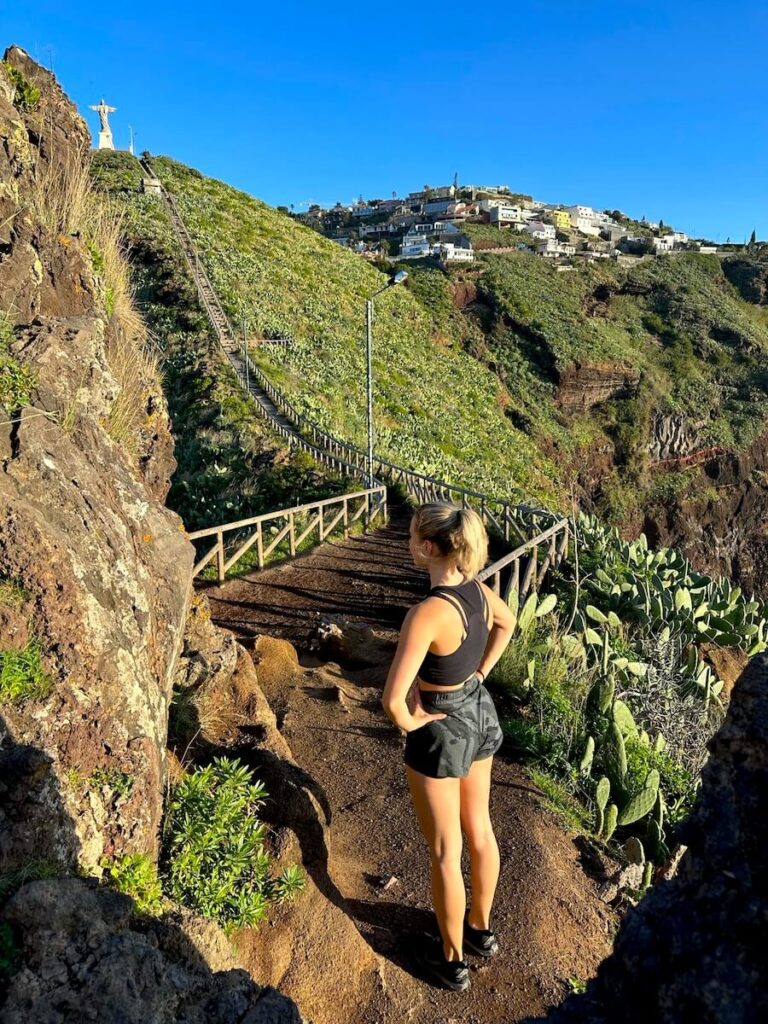
The Cristo Rei statue, beach and cable car are a 15-minute drive from Funchal at most, so they’re great for a quick visit on the way to Machico or the São Lourenço peninsula.
In this blog post, I’ll explain how to get there by car or bus, and how the cable car and beach work.
Disclosure: This post may include affiliate links. If you decide to click through and make a qualifying purchase, I will receive a small commission at no extra cost to you – thanks for your support.
Good news is you can visit Cristo Rei without a car! This tuk-tuk tour will take you there from Funchal, and you’ll get to see some classic Old Town spots too.
What Is Cristo Rei Madeira?
The Cristo Rei statue in Madeira is in Garajau, a suburban town on the south coast.
The statue stands on a green cliff at the bottom of Garajau, with views towards Funchal. Next to the viewpoint is a cable car that’ll take you to Praia do Garajau on the coast below.
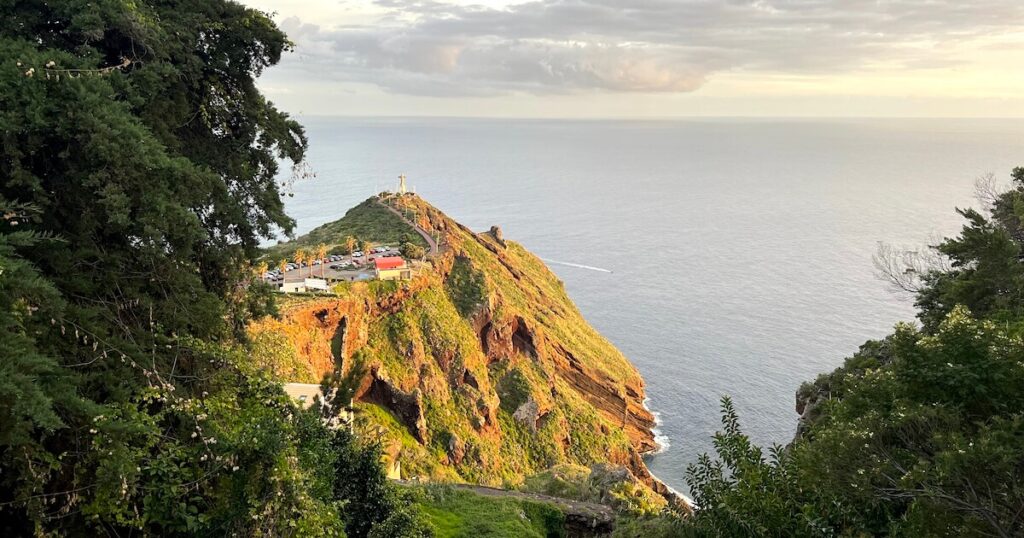
The Cristo Rei statue is interesting because it was one of the first Christ statues to be built in the world, even being finished before Rio’s Christ the Redeemer.
It’s not as big as Christ the Redeemer, but it’s still an impressive size at 14 metres high.
It’s important for Madeira, too, because it was built as a symbol of peace and protection – hence its alternative name, the Sacred Heart.
Is Cristo Rei Worth Visiting?
You don’t need to be religious to visit Cristo Rei in Madeira. The views over Funchal, the Atlantic Ocean and the distant Desertas Islands are spectacular, and there’s a café-bar at the viewpoint where you can grab a drink.
Another highlight is the cable car, which connects the statue to the beach below.
Praia do Garajau, also accessible with a steep hike up and down a winding road, is a wide pebble bay with a beach bar and a diving centre.
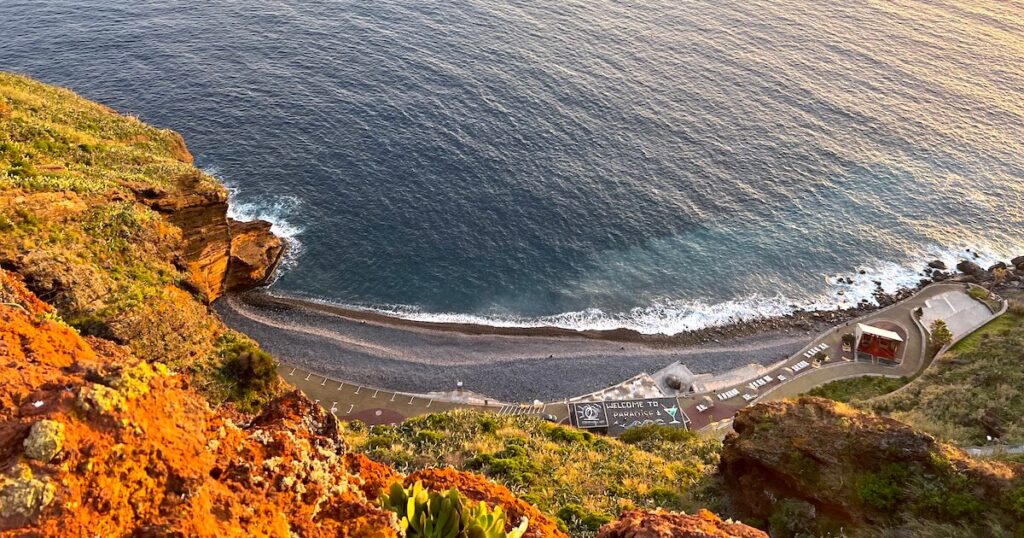
It’s also arguably one of the best snorkelling spots in Madeira and one of the best beaches near Funchal.
Whenever I visited the Cristo Rei viewpoint and the cable car, it wasn’t very busy at all. But it can get crowded during religious holidays and weekends.
It only takes 10 – 15 minutes to visit the statue and observation deck, so Cristo Rei is best as a quick pitstop unless you plan to visit the beach itself, where you can easily spend several hours.
Looking for more of the best beaches in Madeira? My guide lists all my favourite beaches and swim spots, all over Madeira!
The Viewpoint
The Cristo Rei Miradouro is located a little below the statue, down a steep set of stairs. (Climbing back up is tough!)
From the viewpoint, you can see all the way to Funchal Bay, past Caniço. On a clear day, over the Atlantic Ocean, you should be able to see the Desertas Islands, a small, uninhabited archipelago known for its monk seals.
The Desertas look so different depending on the time of day and how the light hits them.
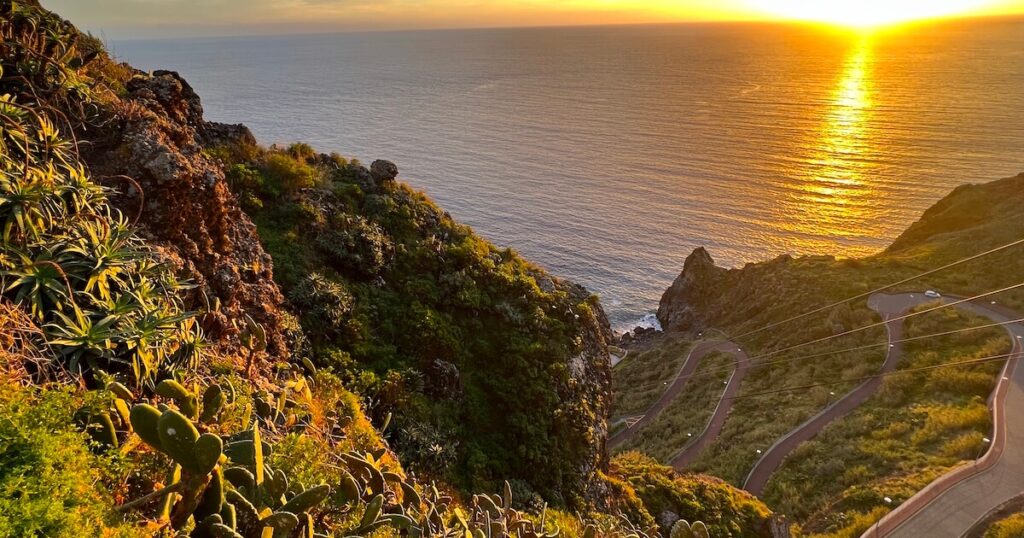
I really like visiting Cristo Rei at sunset, firstly because it’s less crowded and secondly because the sun sets over the ocean, casting an orange glow.
At sunset, you won’t be able to reach the beach, though – the cable car is closed after 6pm.
Taking The Cable Car to Garajau Beach
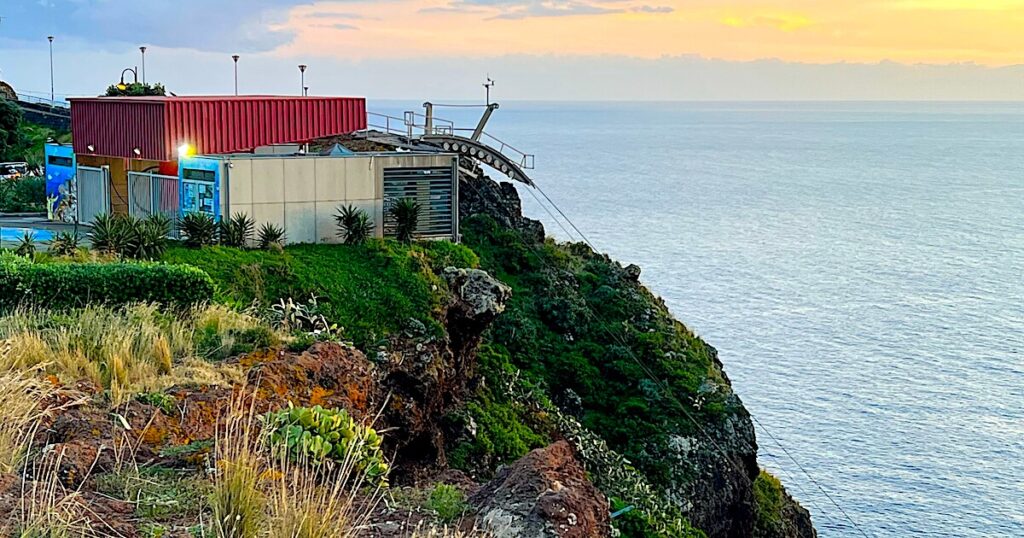
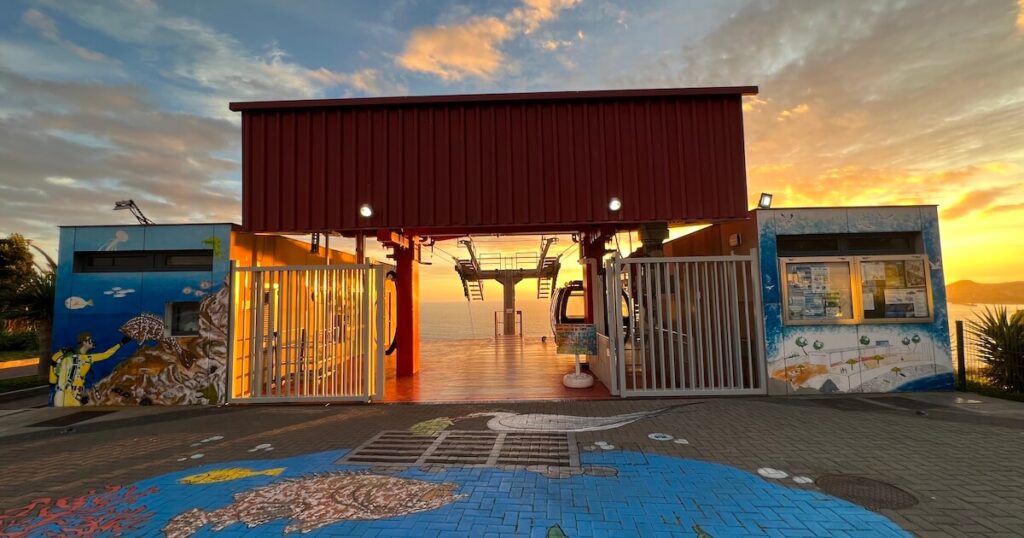
The cable car to Garajau Beach is located right next to the statue and open daily from 10am to 6pm.
The return trip to the beach costs €5 per person for adults. It’s quite a short ride – a matter of minutes – and some of the cable car windows are a little aged, so visibility isn’t always perfect.
Still, it’s inexpensive, and saves you the hike up and down the road. (The parking spaces at the beach are only for the beach bar staff, so you can’t drive up and down yourself.)
Praia do Garajau
Accessible by cable car, Praia do Garajau (Garajau Beach) is a wide pebble beach with a beach bar, where you can grab a drink and rent sunloungers for €3 for the whole day.
There’s a diving school based at the beach, Mero Diving Centre, where you can book dive sessions.
Otherwise, you can go snorkelling on the beach yourself, wearing rock shoes and using your own snorkelling gear; I heard it’s also possible to rent snorkels and masks from the diving centre, so let me know in the comments if you have any success.
It goes without saying that you’ll need to be a strong swimmer; currents are possible at the beach, so do ask the locals whether it’s safe before you go for a paddle.
There are toilets and showers on the beach. And if you get hungry, the beach bar has a good-sized menu with full meals (including fish), coffee and cocktails.
Overall, Garajau Beach is a nice spot to spend a few hours – perhaps with a snorkel, then a celebratory cocktail. Just like Fajã dos Padres, the cable car and beach on the other side of Funchal, you get the added excitement of taking the cable car.
However, for a sandy beach, I recommend going to Machico or Prainha Beach near Caniçal instead.
How to Get to Cristo Rei
By Car
Car is one of the best ways of getting around Madeira, as public transport can be a bit patchy in Madeira. Cristo Rei is only a 15-minute drive from Funchal, along the main motorway (ER101).
There’s a large car park at the viewpoint which is completely free to use. It can get full quickly if it’s busy. So if there’s no space, you can look around the nearby streets for street parking.
If you haven’t yet looked into renting a car in Madeira, my separate guide covers everything you need to know and whether it’s worth it.
Without a Car
If you’re exploring Madeira without a car, you’re left with the following options:
- Tour: Book onto a tuk-tuk tour of Funchal and Cristo Rei. This is a well-known tour that visits both the Old Town in Funchal and the Cristo Rei statue and viewpoint.
- Bus: Take bus no. 109 or 155 (for Caniço), and get off on the main street in Garajau. From there, it’s a 15-minute walk downhill to the statue and cable car.
- Taxi or Bolt: You can also take a taxi, but for Bolt, it’s hard to hail a return car to the city. Your best bet is to call a local taxi company and arrange a taxi both ways.
- Stay nearby: As I explain in my guide to where to stay in Madeira, hotels in Caniço and Garajau are often cheaper than those in Funchal – yet only a short bus or drive away. Dom Pedro Garajau is a short walk away.
How Long Do You Need at Cristo Rei?
For the viewpoint and statue, you don’t need long: 15 – 30 minutes is more than enough to walk around, take pictures and conquer the stairs.
If you fancy taking the cable car to the beach, you’ll need longer (45 – 60 minutes at least)– longer if you plan to rent a sunlounger, have a cocktail or go snorkelling.
What to Combine with Cristo Rei
- Reis Magos Beach: This is a swimming spot in Caniço used mostly by locals. It’s not really a ‘beach’ in the traditional sense, but I like to sunbathe on the concrete pier. When conditions are calm, I’ll jump into the water off the pier. There’s also a promenade and a nice snack bar.
- Machico: Further east is the city of Machico. It has a sandy beach and a couple of great hikes (one easy, the other a little more challenging), as I explain in my guide to the best things to do in Machico.
- Prainha Beach, Caniçal: A small black-sand beach tucked under the cliffs. It’s a really nice spot, not that well known among tourists either.


FAQs
Most of Cristo Rei is free to access, including the grounds, chapel and terrace at the bottom of the statue. However, the cable car to the beach and the top viewing platform require a fee.
You can swim at Garajau Beach, accessible by cable car from Cristo Rei, when the conditions are calm; it’s a popular snorkel spot. There’s also a dive centre based at the beach.
You must take the cable car from Cristo Rei to Garajau Beach. It’s open daily from 10am to 6pm. The parking at the beach is only for staff at the beach bar. Hiking to the beach is possible, but the road is very steep.