
Is Madeira Safe to Visit? First-Hand Tips For Hiking and Exploring Safely

It’s a question that I’ve heard more than once: “Is Madeira safe to visit?” Whether you’re a solo female traveller or looking for tips on hiking safety in Madeira, it’s a valid question.
On holiday, feeling safe, secure and – hopefully – happy is so important.
I’m now approaching my fourth trip to Madeira as a solo female traveller. Before my first trip, I also wondered, “Is Madeira safe to visit?”
The only way to find out was to go, and having spent over 6 months on the island, it’s time to share my honest opinion and my top tips for staying safe in Madeira.
If you’re looking for more advice that’ll help you plan your trip, check out my Madeira travel tips.
Disclosure: This post may include affiliate links. If you decide to click through and make a qualifying purchase, I will receive a small commission at no extra cost to you – thanks for your support.
What is the Crime Rate in Madeira?
The crime rate in Madeira is low compared to the rest of Portugal. The main concerns are pickpocketing and theft, with holiday rentals and tourists often being the main target.

According to a press release from the Regional Directorate of Statistics of Madeira, in 2023, the ratio of the number of crimes per 1,000 residents in Madeira was 28.1%, with ‘petty’ crimes being the most common.
This is lower than the national average.
Is Madeira Safe for Solo Female Travel?
As a solo female traveller in Madeira, there have been a few times I have felt unsafe:
- In my first week in Madeira, I was followed and harassed by several drunk men in Câmara de Lobos during the day. Speaking to locals, I found out that alcohol overuse is a problem in the fishing village.
- In Funchal, I have been catcalled by men when walking alone.
- I have seen discussions in expat Facebook groups between women who have been followed and sexually harassed while trail running in Madeira.
That being said, I have travelled to 30+ countries and I would rank Portugal (and Madeira) as one of the safest destinations I have visited as a solo female traveller.
Aside from those few incidents, I generally feel comfortable and confident walking alone during the day and night in Funchal, which I can’t say of too many destinations.

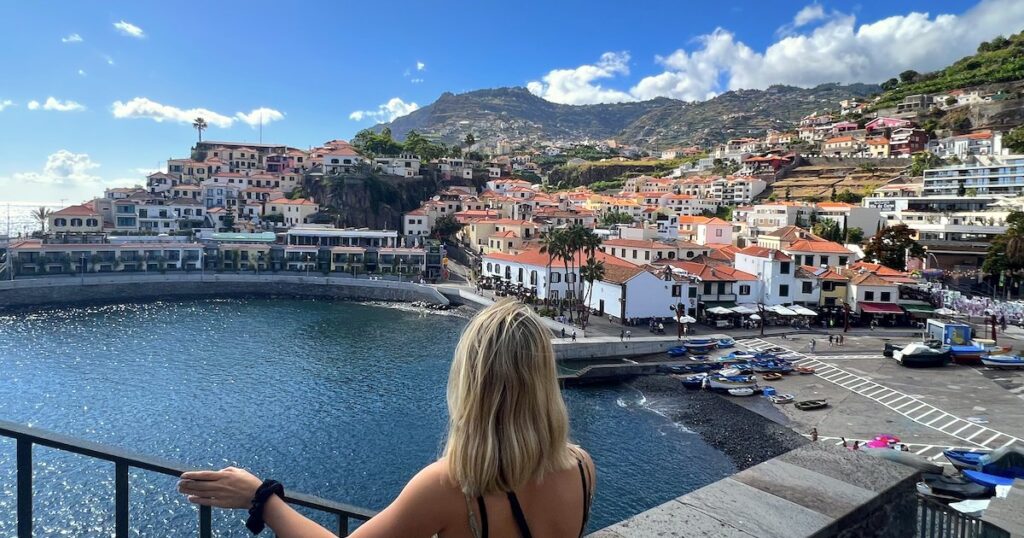
Considering that I’ve spent over six months in Madeira and can count on one hand the number of times I’ve felt unsafe, it has a pretty good scorecard.
I’d give it a 9/10 for safety for solo female travel, especially if you join group hiking tours and stick to well-populated trails.
How to Stay Safe When Hiking In Madeira
The main issue with safety in Madeira is that tourists don’t take proper precautions when hiking.
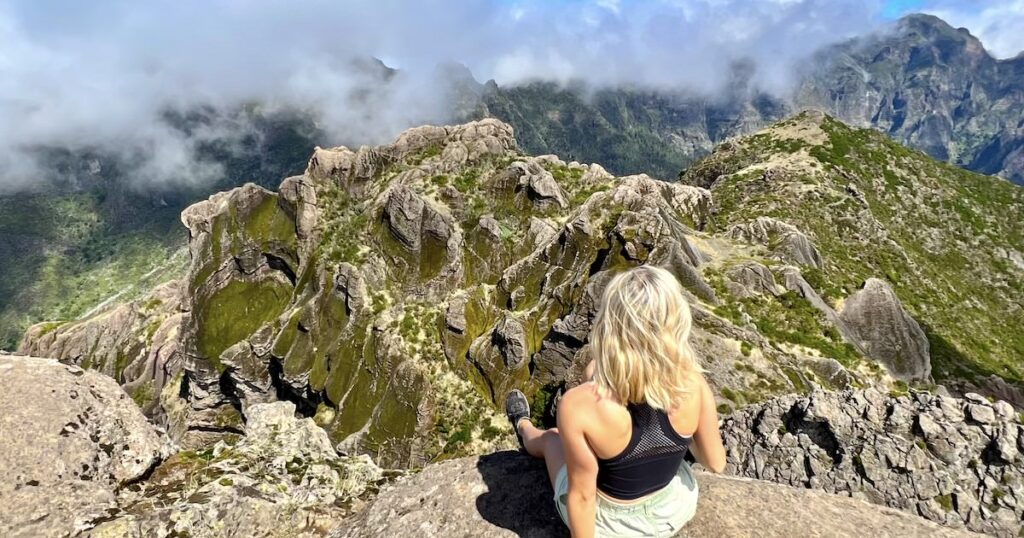
Yes, Madeira may be a popular holiday destination, but its mountains are natural landscapes that experience rapidly changing weather conditions and visibility, landslides and high winds.
1. Check the list of trail closures before you go hiking
My first, and most important, piece of advice is to always check the up-to-date list of trail closures in Madeira before you go hiking.
Trails can be closed at short notice due to landslides, maintenance work or a high risk of falling debris.
For example, the PR1 trail (Madeira’s most famous hike) was partially closed for most of 2025.
2. Consider joining a guided hike if you’re not an experienced hiker
It’s easy to underestimate the trails in Madeira. If you’re not someone who likes to go hiking on the weekend, you can’t expect your body to suddenly adapt to hiking 14km+ and 1000 metres of incline in one day.

PR18, Levada do Rei
Likewise, if you’re not used to navigating trails using offline maps such as AllTrails, you can easily get lost.
This isn’t too much of a problem in Madeira. In my guide to hiking in Madeira without a car, I list 6+ trails that you can do by joining a tour:
- PR1 (Pico do Ariero to Pico do Ruivio): 8 kilometres
- PR8 (Ponta de São Lourenço): 7.6 kilometres
- PR6 (Levada das 25 Fontes): 7.2 kilometres
- Hiking Trip With A Local: PR18 Levada do Rei (10.5 kilometres), PR9 Levada do Caldeirão Verde (11.9 kilometres), Vereda do Larano (9 kilometres) and others.
3. Pack enough food, water and first-aid for the trail
On hot days, I recommend carrying at least 3 – 4 litres of water per person for a day on the trails. It’s better to be over-prepared than under-prepared.
While some levada trails may have coffee shops, there are usually no shops or restaurants along the mountain trails.

Vereda do Larano
Whenever I go hiking, I prepare a packed lunch, snacks and a first-aid kit. In terms of first-aid, you’ll want to be prepared for everything from small bumps and cuts to broken bones.
4. Download an offline map
Many of the trails don’t have a stable 4G connection. Therefore, it’s a wise idea to download an offline map on an app like AllTrails.
Is It Safe to Swim in the Ocean in Madeira?
One of the biggest mistakes I see tourists make when they visit Madeira is not being aware of the basic principles of swimming safety.
The best Madeira natural pools were built to create safe, enclosed swimming spaces for the general public and tourists.
However, some tourists then decide to climb on top of the volcanic rocks for the photo opportunity. I can’t emphasise enough how dangerous this is.
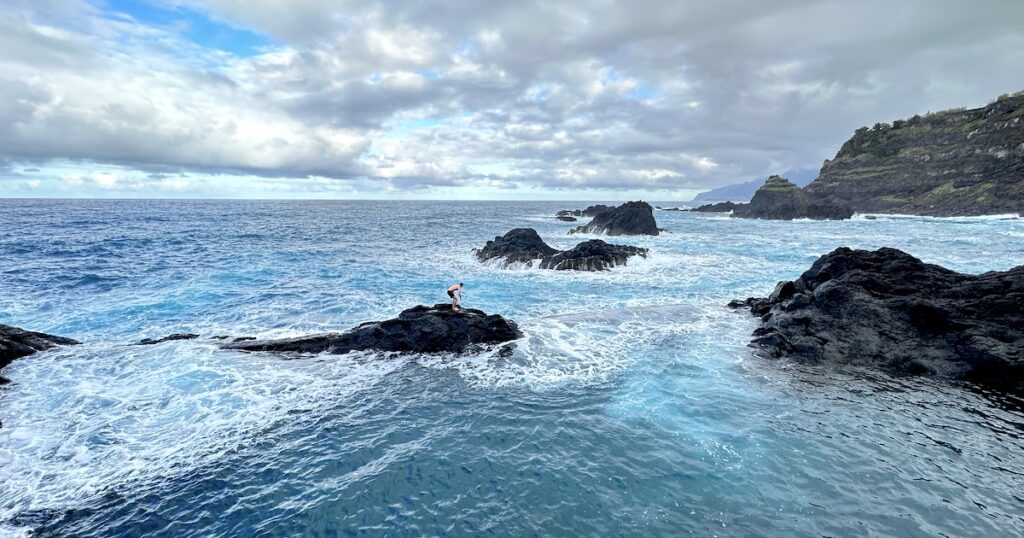
Don’t be this guy!
Many tourists have been caught off guard by a wave and swept out into the open ocean, where rescue takes a significant amount of time. Unfortunately, people have died.
I am very picky about where I swim in Madeira. I prefer to swim at beaches with harbour walls, such as the sandy beach in Machico, Seixal Beach and Calheta Beach.
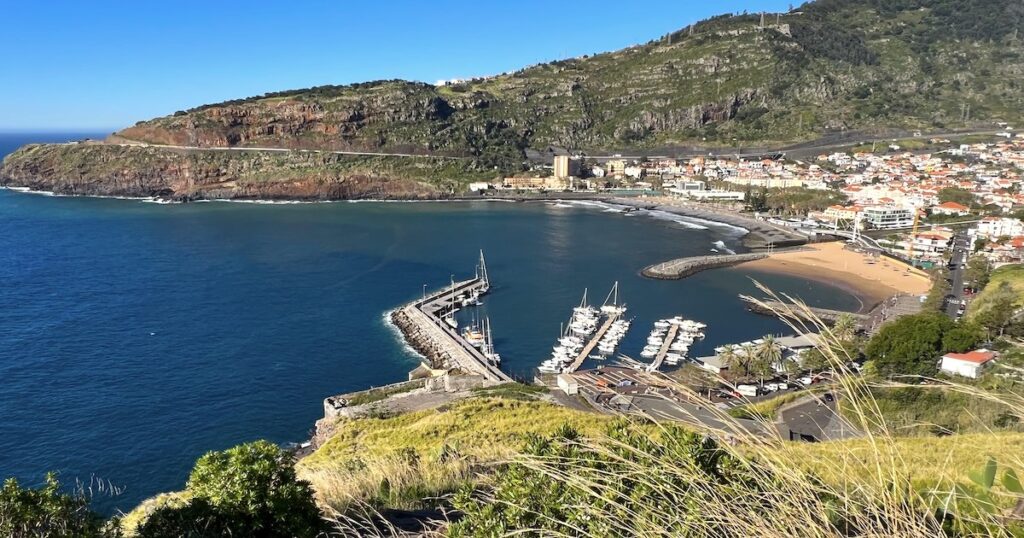
Machico Beach, one of my favourite places to swim
Strong currents and big waves are common in Madeira, so always be cautious about diving into the water from promenades and beaches without a harbour wall or lifeguards.
My Top Tips For Staying Safe When Visiting Madeira
- Carry valuables in a secure belt bag.
- Don’t leave your belongings unattended in public spaces.
- When driving in Madeira, wear a seatbelt and familiarise yourself with the traffic rules. Only drive if you’re confident and experienced.
- Before you go hiking, check the list of trail closures.
- Always carry enough food, water and first-aid for your hike.
- If you’re hiking solo or not experienced, consider joining a group tour.
- Make sure your Madeira packing list includes proper waterproof and windproof hiking gear, robust hiking shoes and layers for cold weather.
- Take out travel and medical insurance before your trip. If you have one, carry your European Health Insurance Card or UK Global Health Insurance Card.
- Watch out for cobbles and uneven ground when walking around Funchal.
- Don’t take photos on cliff or levada edges.
- Beware of scams and inflated prices for tourists at the Funchal Farmer’s Market.
FAQs
Can you drink the tap water in Madeira?
Are there good pavements in Madeira?
I hope you found my guide useful. Leave a comment below if you have any more questions (“Is Madeira safe?” is just the beginning!)


