Madeira Travel Tips: 8 Things You Must Know Before Visiting Madeira

The best Madeira travel tips aren’t buried in guidebooks. They come from first-hand stories of missed buses, rainy days on the trails and accidentally stumbling across the best maracuja poncha of the trip.
As popular as Madeira has become, I still find that tips for visiting Madeira are limited online. And, more often than not, they’re written by someone who has never set foot on the island.
With three trips to Madeira under my belt (amounting to 5+ months on the ground), I’m here to share my ultimate travel tips for Madeira.
I’ll cover some common misconceptions, as well as important Madeira travel trips like the best time to visit, whether it’s worth renting a car, and tips for booking your accommodation.
Disclosure: This post may include affiliate links. If you decide to click through and make a qualifying purchase, I will receive a small commission at no extra cost to you – thanks for your support.
1. Don’t believe the travel magazines. Madeira is not always hot and sunny.
I’m not sure what the obsession is with travel magazines advertising Madeira as a year-round travel destination with sunny weather every day. It’s simply not true.
As I explain in my guide to the best time to visit Madeira, the island has very distinct spring, summer, autumn and winter seasons.

Madeira in February
Yes, the island’s winters may not drop to -15°C, as in places like Canada.
However, as I learnt first-hand in February, the island can get very rainy and windy despite temperature estimates averaging between 17°C and 22°C.
Even on the ‘sunny’ south coast, I was often wrapped up in a jumper and jeans.


These photos were taken on Madeira and Porto Santo in autumn/winter
If you’re heading into the mountains in search of spectacular views, you’re also likely to find them obscured by clouds and your ears craving a warm, woolly hat.
There’s a saying in Madeira, “Madeira’s wearing its hat”. From December all the way through to March, the increased rainfall causes clouds to cling to the top of the mountains.

On this day in March, Madeira was truly wearing its hat!
The clouds can stick around for hours or days at a time. During this time, you’re better off sticking to lower coastal trails rather than navigating the mountain paths.
When you’re planning your Madeira packing list, always pack layers – even if you’re visiting in the summer – because the weather can change day to day and valley to valley.
2. Renting a car is usually (but not always) the best way to explore Madeira.
There are several ways of getting around Madeira: renting a car, taking public transport or using tours and transfers.
If you really want to see Madeira, the best way to get around is by renting a car.
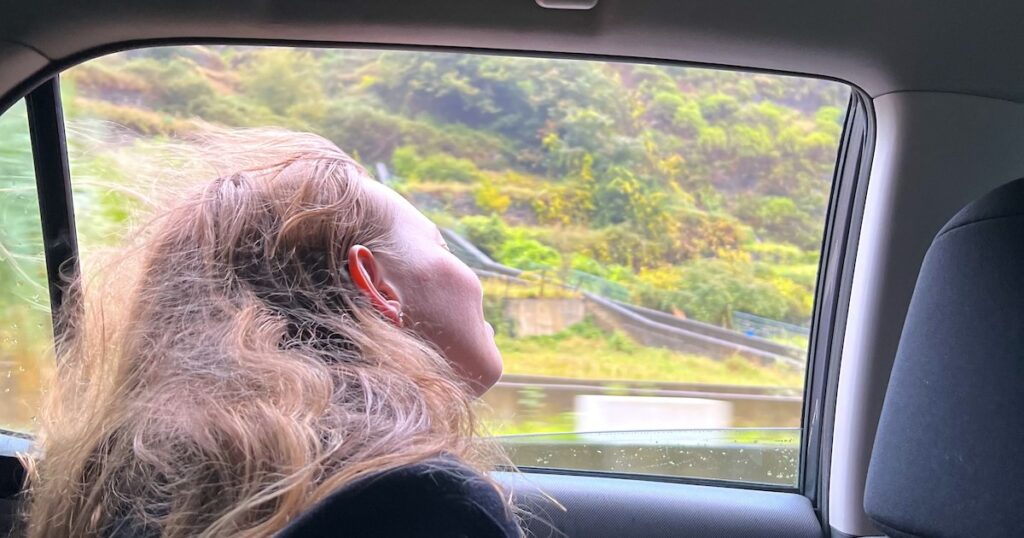
The south coast of Madeira is fairly well-served by public buses. However, the fact of the matter is that you can’t reach many hiking trails, towns and villages without a car or scooter.
Just make sure to familiarise yourself with some of the legal requirements and cultural quirks before driving in Madeira.
I also have a detailed guide on renting a car in Madeira to help you decide if it’s the right decision for you – and common mistakes.
Two key sites will help you to hire a car in Madeira: Discover Cars and Klook.
That’s not to say that you can’t have a spectacular, once-in-a-lifetime trip without a car. On the contrary, as I explain in my guide to visiting Madeira without a car, there are many activities that you can do by taking the bus, cable car and tours/transfers.


Hiking in Madeira without a car!
In my guide to hiking in Madeira without a car, I have provided the details for 10 incredible hikes that you can do in Madeira without renting a car.
3. Madeira’s hikes are spectacular, but the island offers so much more than that.
I’ll be the first to admit that when I spend time in Madeira, I often get preoccupied with hiking.
With so many dramatic coastal and mountain hikes at your fingertips, it’s easy to forget about what else the island has to offer.
For example, did you know that Madeira is excellent for dolphin and whale watching?
In my first week in Madeira, I took the half-day Magic Dolphin eco catamaran tour from Funchal and spotted handfuls of pilot whales and a pod of bottlenose dolphins.

My first sighting of a pilot whale in Madeira
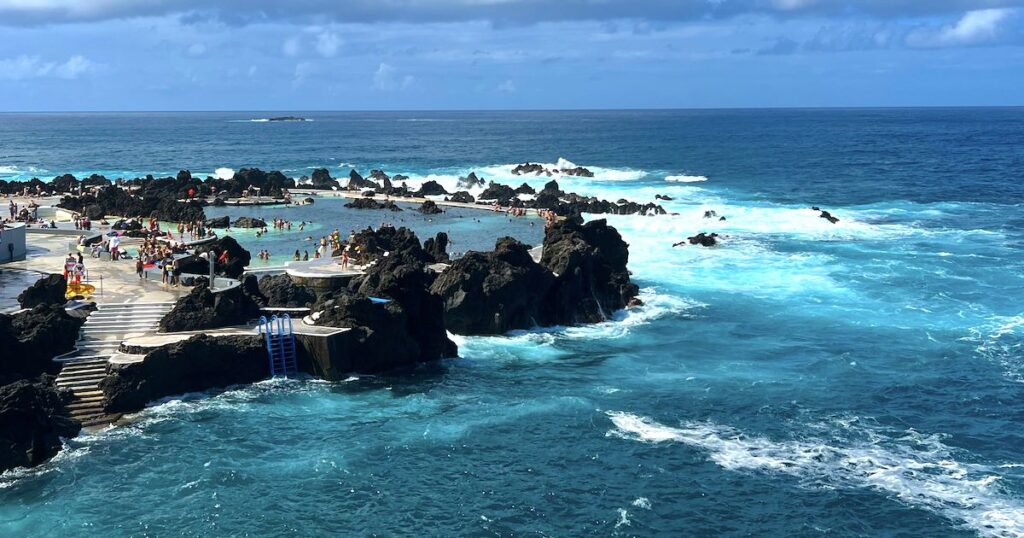
Madeira is also renowned for its volcanic pools, formed by volcanic eruptions years and years ago. You can go swimming in all four of the best Madeira natural pools.
If you’re staying on the south coast, the closest is Doca do Cavacas in Funchal.
However, the most famous pools are located along the dramatic north coast of Madeira. These include the Seixal natural pools and the two Porto Moniz natural pools.
Black-sand or white-sand beaches are also scattered around the coast of Madeira. My favourites are Seixal Beach, Machico Beach and Prainha.

Prainha
Of course, you must also visit Madeira’s only UNESCO World Heritage Site, the misty Fanal Forest.
There are a couple of hiking trails around Fanal Forest, the PR13 (Vereda do Fanal) and PR14 (Levada dos Cedros), so you can easily make a day out of it.

Fanal Forest
One of my favourite things in Madeira is the festivals, which celebrate all sorts of things such as chestnuts and flowers.
Carnival (in February) and the New Year’s fireworks displays are must-sees.
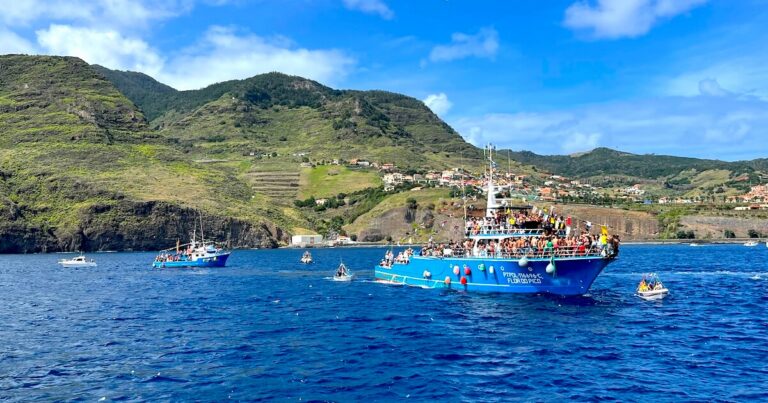
My ultimate favourite is a lesser-known fiesta that takes place in Caniçal, the Festa de Nossa Senhora da Piedade, where the robust town fishing boats carry the statue of Our Lady to a hilltop chapel.

One more thing! Don’t forget to try the typical Madeira beverage, poncha, which is made from sugar cane juice and honey.
There are plenty of poncha bars in Funchal, but the best poncha bar on the island is most definitely Taberna da Poncha, where peanut shells litter the floor.
(And if you don’t feel like poncha, simply check out my list of the best cafés in Madeira instead).
4. Always check for trail closures before you hike
With dramatic mountains comes the risk of landslides, loose debris and unpredictable weather.
Therefore, the trails (especially those high in the mountains) are often subject to long-term or last-minute closures.

Before you go hiking, always check the up-to-date list of trail closures in Madeira. For example, the PR1 hike (Pico do Arieiro to Pico Ruivo) often has restricted access.
5. Madeira now charges an entry fee for its most popular trails.
On that note, entry fees have recently been introduced to all classified walking trails in Madeira. These go towards maintaining the trails and conservation efforts.
That’s why one of my important Madeira travel tips is a reminder that you must book and pay the entry fee in advance via the online SIMplifica portal if you are a non-resident aged over 12.
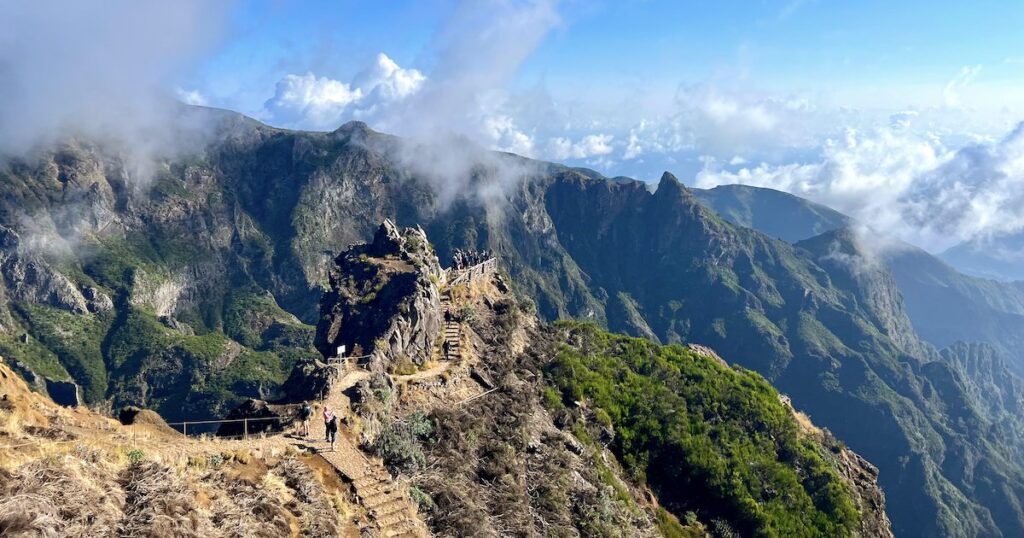
Entry fees apply to most of the classified, numbered trails (marked with PR) in Madeira, including PR1 (Pico do Arieiro to Pico Ruivo), PR6 Levada of the 25 Fountains) and PR8 (Ponta de São Lourenço Trail).
6. One of my most underrated Madeira travel tips: For a truly special stay, book a quinta hotel.
Madeira’s quinta hotels are some of the most underrated places to stay. Quinta is the name for traditional estates belonging to wealthy families and landowners.
Many of these historic homes, complete with landscaped gardens and traditional architecture (like terracotta roofs and vast verandahs) have been transformed into luxury, boutique hotels.
The gardens often have vineyards or orchards. Basically, these hotels are estates with character rather than your bog-standard hotel chain.
Often tucked away in private land or concealed by high walls, you wouldn’t know they were there unless someone told you.
Best Quinta Hotels in Madeira

Quinta da Casa Branca (£££)

Quinta Jardins do Lago (£££)

Quinta da Bela Vista (£££)
7. If you want to stay in a hostel, make sure to book your stay months in advance.
If there’s one thing that Madeira’s lacking, it’s a good hostel scene.
As I explain in my guide to the best hostels in Madeira, for many years, Madeira has been a destination for retirees. However, after several of the hikes went viral on social media, there has been a sudden influx of younger, budget-conscious tourists.
Madeira solo travel is growing, and I’m happy to see it happening. However, there are only a handful of hostels on the island, which means the hostels get booked up several months in advance.
If you’re visiting Madeira on a budget, you need to act quickly and avoid leaving booking your accommodation to the last minute.
8. Don’t explore without some cash in your pocket.
Many destinations around the globe operate on a mainly cash-free basis, but Madeira is not one of those.
Carrying at least €20-50 in cash is a good idea at all times. (Obviously, do keep this safe. As I explain in my answer to “Is Madeira safe to visit?”, crime rates are low but petty thieves do exist.)
Most, but not all, of the buses in Madeira require payment in cash. Similarly, I’ve run into scenarios where the cash machine at a car park does not have a working card payment. In those cases, cash is essential.
Restaurants in Funchal typically accept card payments. However, when I have explored the north coast and remoter villages, I’ve visited a few coffee shops and restaurants that only accept cash.
Check out my full guide on how much to budget for Madeira while you’re at it – it’s packed with important Madeira travel tips, such as the typical cost for food, coffee, accommodation and transport.
I hope you found my Madeira travel tips useful – leave a comment below if you have any questions or simply to share your trip plans. I’d love to hear from you!